Window AC vs Mini Split: Plug-In Cooling or a Ductless Heat Pump?
Classic AmericaOct 26th 20267 min read
The short answer
- Choosing between a window AC vs mini split mostly comes down to heat, your window, and who does the install. Our window units cool only, while every one of our mini splits is a heat pump.
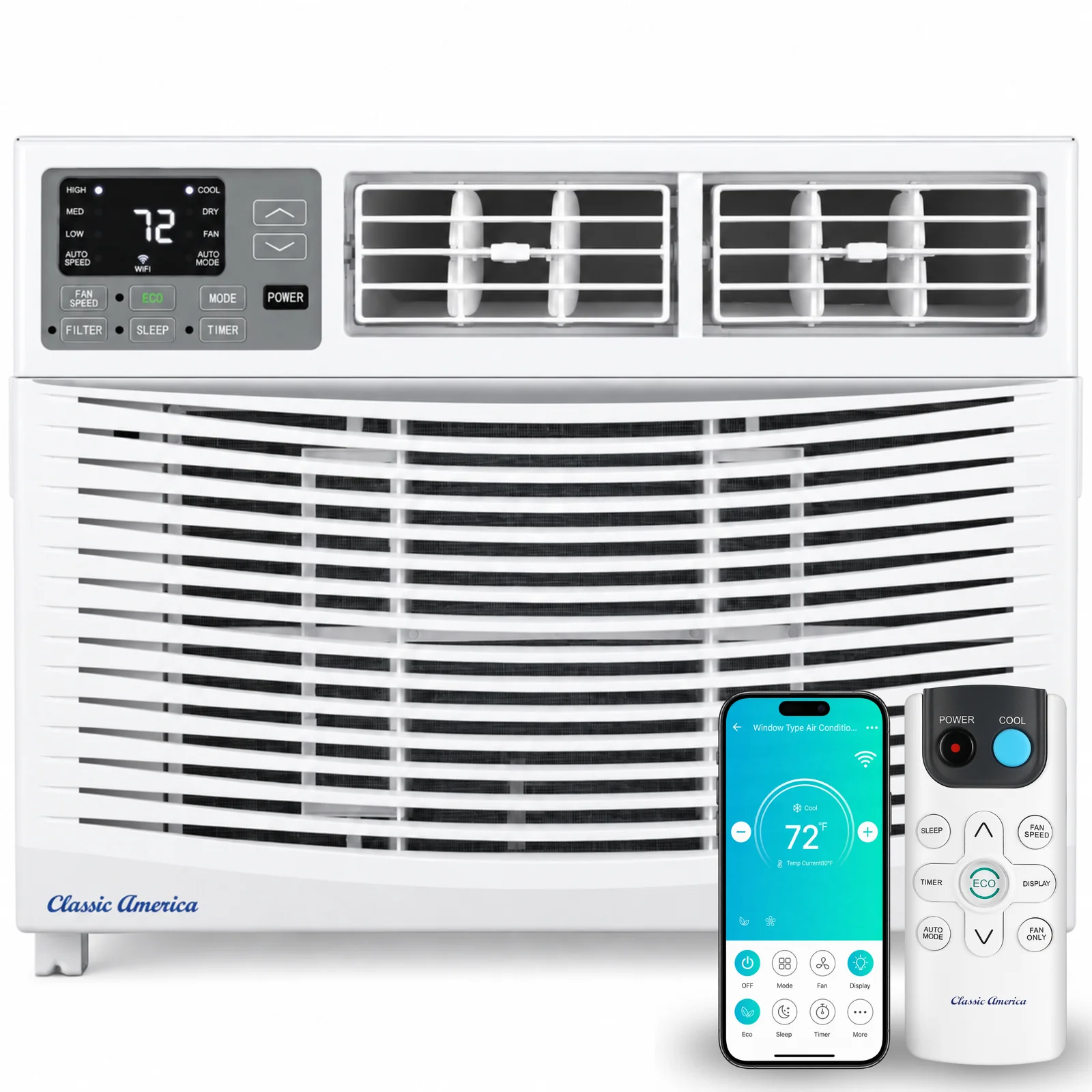
- Both window sizes are 115V plug-in, CEER 10.9, and sit right in the sash. The 8,000 BTU unit fits windows 23–36 inches wide, and the 12,000 BTU unit fits 26–36 inches.
- You can plan a mini split’s mounting at home, but refrigerant connections, the vacuum, and a dedicated electrical circuit are jobs for a licensed HVAC pro.
- Matching BTU doesn't make them interchangeable. A 12,000 BTU window unit and a 12,000 BTU mini split both say about one ton of cooling on the label, but they're different products.
- The 19 SEER2 mini split is published for up to about 550 square feet, not 600. Size your room with the Size Finder, and check your window with the Window Fit Checker.
Quick comparison
| Window AC | Mini split | |
|---|---|---|
| What it does | Cools only | Cools and heats |
| Power | 115V plug-in | Dedicated circuit |
| Install | You, in the sash | Mount: you. Refrigerant: pro |
| Efficiency | CEER 10.9 | SEER2, if the sheet lists it |
| Heat | None | Heat pump |
| Window | Required | Not required |
| Best fit | Seasonal cooling | Heat and cool |
Window AC vs mini split, side by side
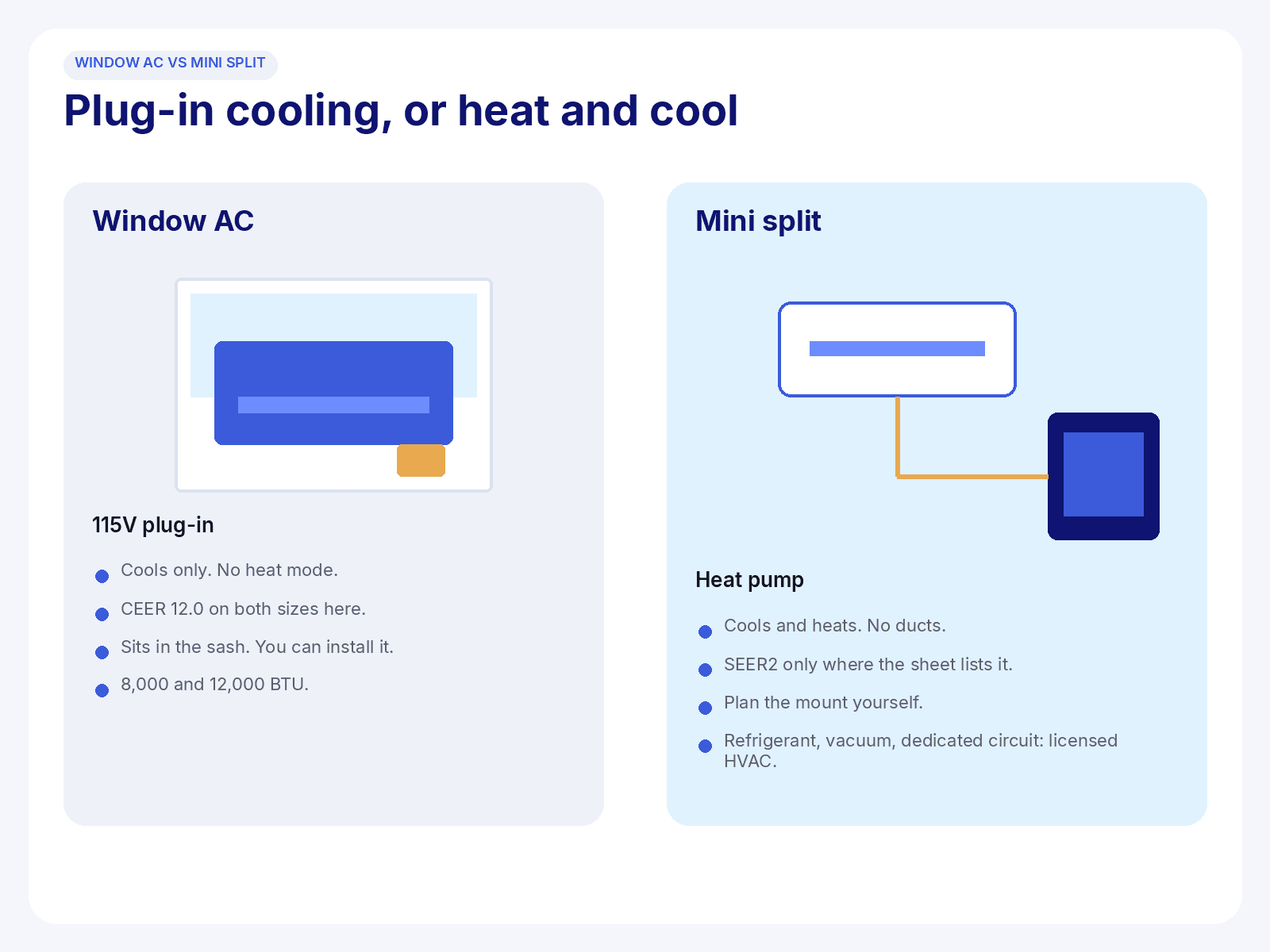
“Window AC vs mini split” and “mini split vs window AC” are the same question asked from two directions. One is usually just research, while the other leans toward buying a ductless system. This page answers both using the spec sheets, not slogans. Our earlier window-versus-mini-split piece takes a longer look at the same choice, and the numbers below follow the current spec sheets.
There's no single efficiency scale for both. Our window units are CEER 10.9, and the mini splits that publish SEER2 list 17, 19, 23, or 24 (DUET, non-ducted). Our what SEER2 means page explains why you can't compare those labels directly. The 23,000 BTU mini split is rated 17 SEER2, but that still isn't CEER, so it doesn't belong on the window-unit scale.
What you can install yourself
A window unit is the DIY option in our catalog. It ships with a kit, plugs into a standard 115V outlet, and comes right out of the sash when you're done. Just measure before you order. The Window Fit Checker checks width and opening height: 23–36 inches wide and 14.5 inches of opening for the 8,000 BTU unit, and 26–36 inches wide and 16 inches of opening for the 12,000 BTU unit.
A ductless install is a different kind of job. Choosing the wall for the head, where the outdoor unit sits, and how the line set will run is great homeowner planning. The Install Planner checks line-set length, power, and mounting against your model, but it doesn't turn the refrigerant work into a weekend project. Refrigerant connections, pulling a vacuum, and a dedicated electrical circuit are jobs for a licensed HVAC professional. You're covered for 5 years on the compressor and 1 year on parts.
Good to know
- A window unit isn't a heater. These two models don't have a heat mode.
- Please don't open the line set, add refrigerant, or pull a vacuum yourself.
- The 19 SEER2 mini split isn't a 600-square-foot unit. Its spec sheet says up to about 550.
- The window unit spec sheet prints two coverage ranges. Neither one is a promise for your particular room.
Mini split vs window AC when you also need heat
If the room needs to be warm in January, the window unit is out. These window units are cooling-only. A mini split heat pump moves heat the other direction in winter, though the heating number on the spec sheet isn't a copy of the cooling BTU. Our mini split heat pump guide shows how published output drops as the outdoor temperature falls, without overpromising on cold climates. The Size Finder estimates both cooling and heating.
Renters and people cooling a room just for the season often stick with a window unit, since it doesn't need a hole in the wall or a dedicated circuit. Homeowners who are tired of giving up a window, and who can hire out the refrigerant work, are the usual mini split buyers. The equipment price ranges in general US articles are commonly published figures, not Classic America prices. You'll find those ranges, kept separate from installation, in how much a mini split costs, and what a contractor charges to install is covered in mini split installation cost.
The window units
Both are 115V, Wi-Fi enabled, cooling only, and CEER 10.9. The card may show coverage as a range, because the spec sheet prints two: an EPA range and a tighter manufacturer range. Neither one replaces the Size Finder.
8,000 BTU window unit
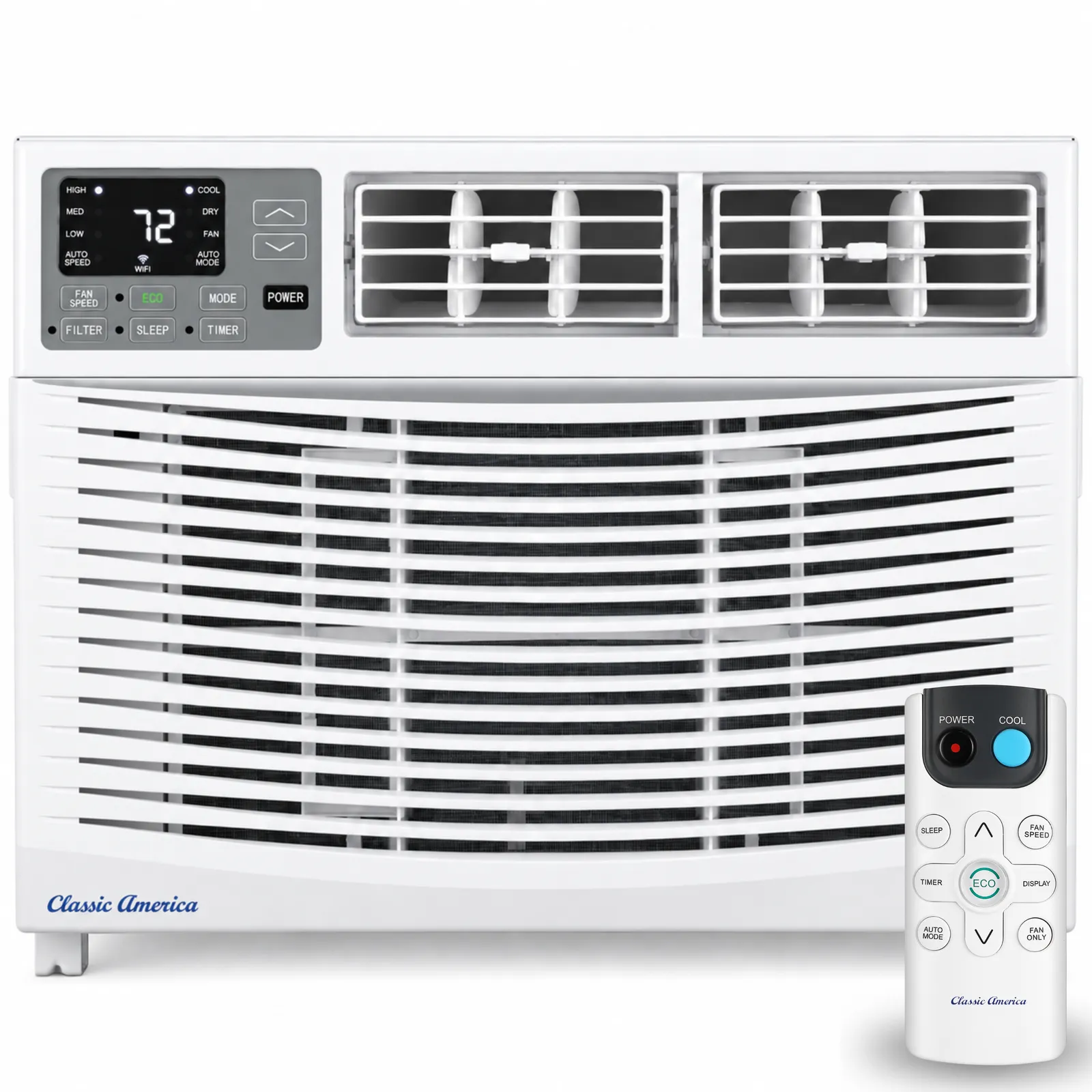
The 8,000 BTU window air conditioner delivers 8,000 BTU/h, about two-thirds of a ton of cooling. The spec sheet lists an EPA coverage range of 300–350 square feet and a manufacturer range of 118–170. It runs at about 53–58 dB(A) from low to high, and fits windows 23–36 inches wide with at least 14.5 inches of opening.
From the spec sheet
- 8,000 BTU/h cooling · 2/3 ton
- 10.9 CEER. Window units are not rated in SEER2
- 115V
- 300–350 sq ft
12,000 BTU window unit
The 12,000 BTU window air conditioner delivers 12,000 BTU/h, one ton of cooling on the label, and is rated for 400–450 square feet. It runs at about 55–59 dB(A) and needs a wider window: 26–36 inches, with at least 16 inches of opening. It still isn't the same as the 19 SEER2 12,000 BTU mini split, which is a heat pump published for up to about 550 square feet under typical conditions.
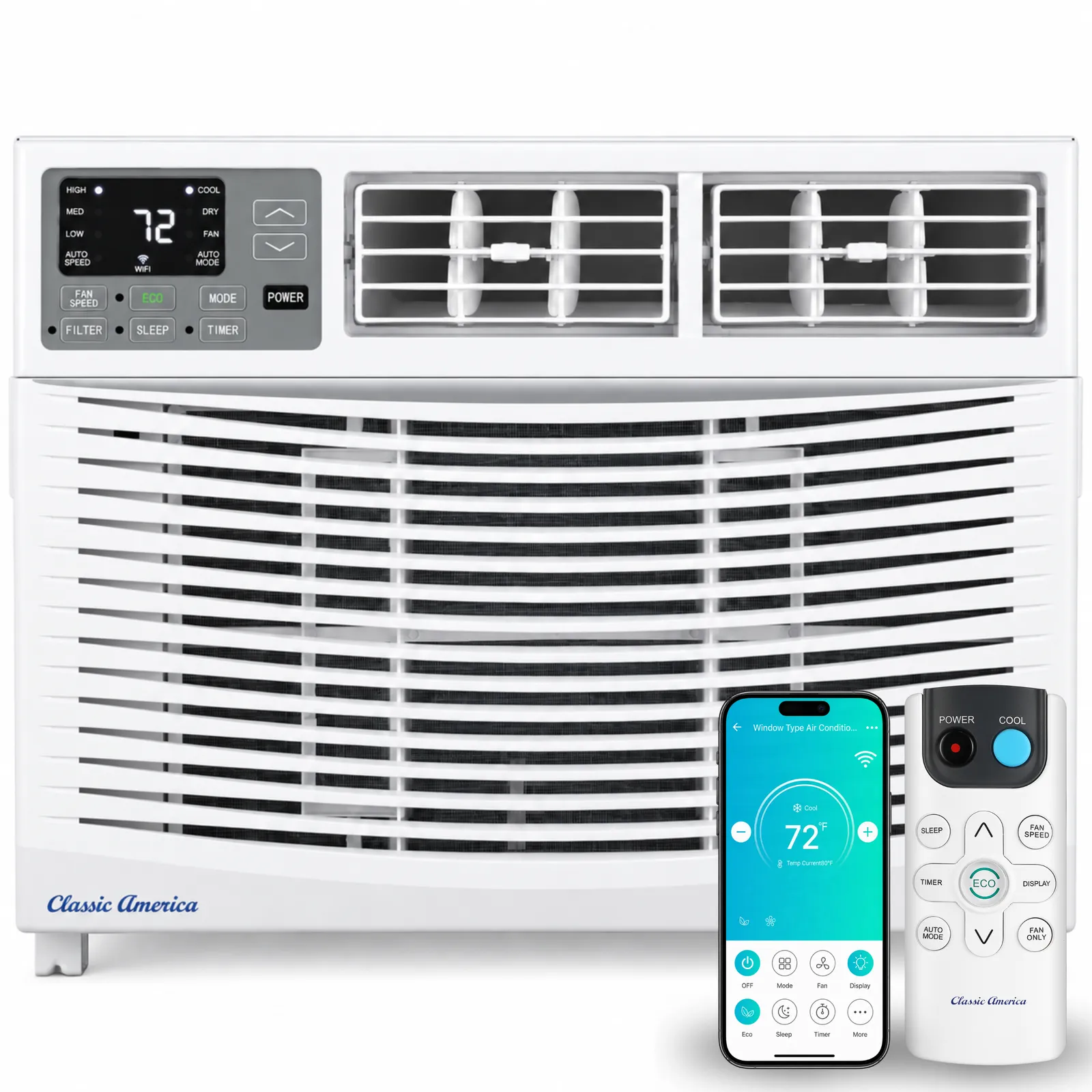
From the spec sheet
- 12,000 BTU/h cooling · 1 ton
- 10.9 CEER. Window units are not rated in SEER2
- 115V
- 400–450 sq ft
You can browse both in our window AC category.
The mini splits people compare them with
For a single room that also needs heat, the usual comparison is a 115V single-zone system. The 9,000 BTU mini split is 23 SEER2 and covers up to about 400 square feet. The 19 SEER2 12,000 BTU mini split is 19 SEER2 with a full 12,000 BTU/h, covering up to about 550 square feet. The 17 SEER2 12,000 BTU mini split publishes 11,500 BTU/h of cooling and covers up to about 550 square feet. You'll find all three on the 110V mini split hub. If a quote talked in tons, our BTU to tons guide translates those BTU figures for you.
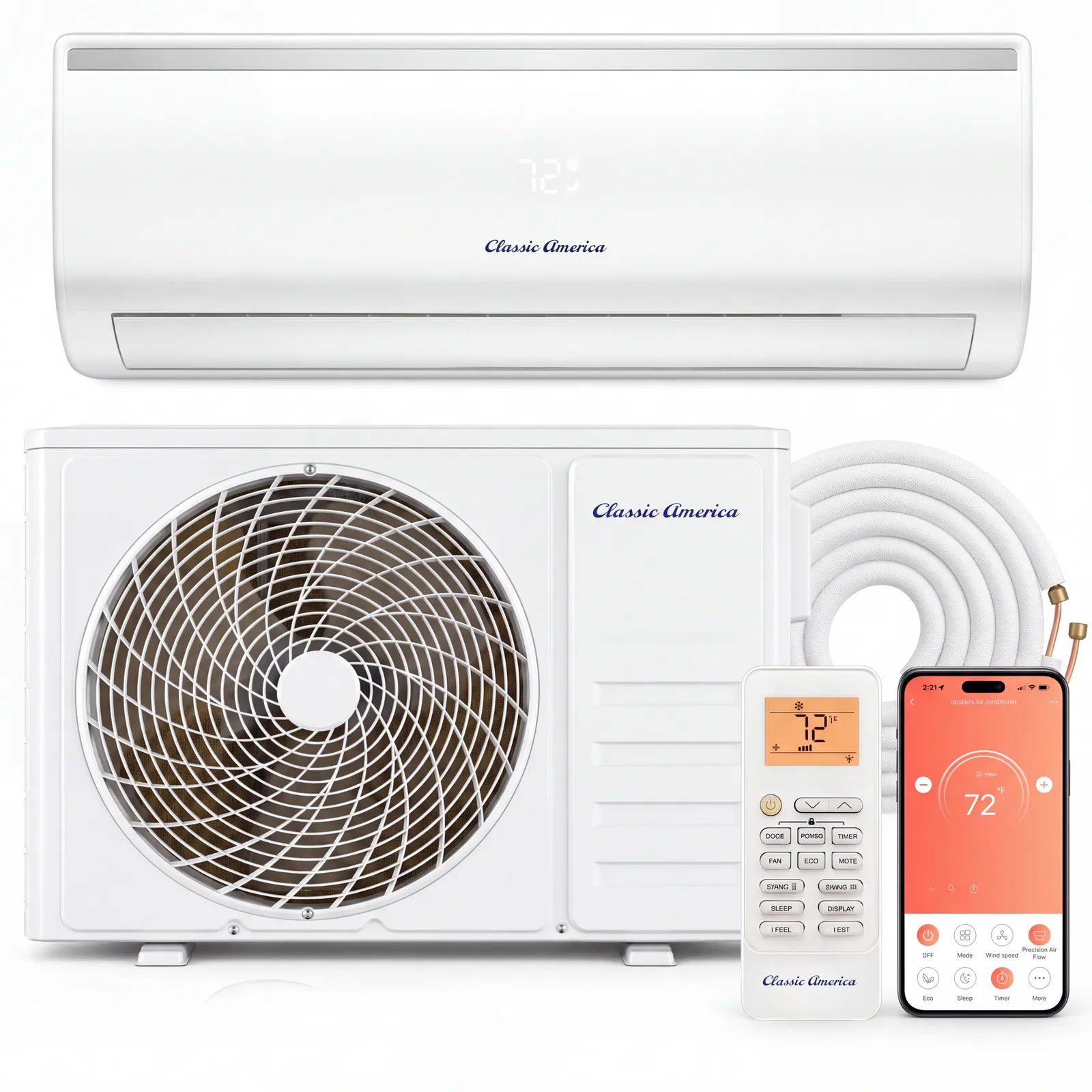
From the spec sheet
- 9,000 BTU/h cooling · 0.75 ton
- 23 SEER2
- 115V
- Up to 400 sq ft
- Heating nameplate 9,500 BTU/h
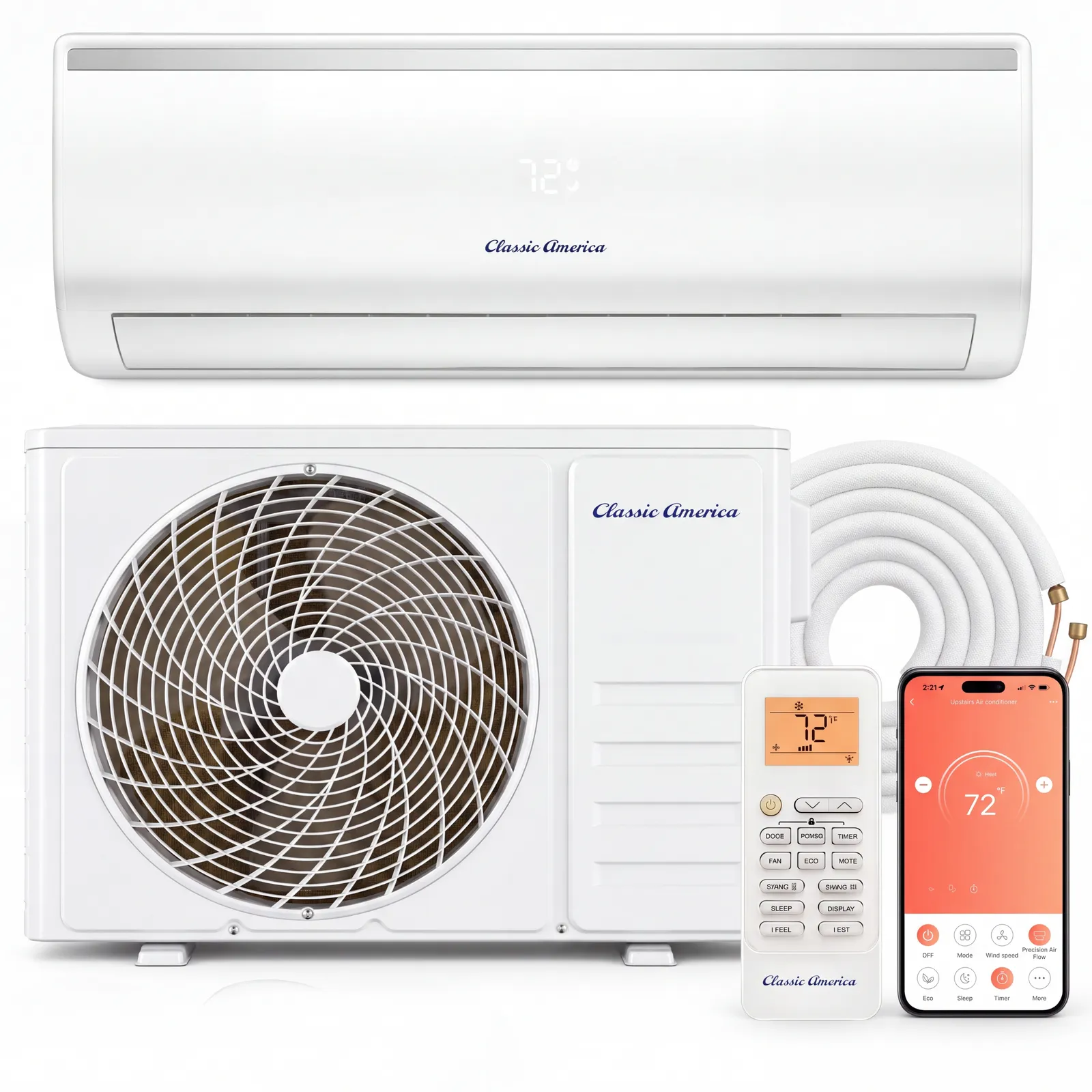
From the spec sheet
- 12,000 BTU/h cooling · 1 ton
- 19 SEER2
- 115V
- Up to 550 sq ft
- Heating nameplate 12,200 BTU/h
Having two rooms isn't a reason to buy a bigger window unit. It's a reason to check out DUET in our multi zone mini split guide: one outdoor unit, two indoor heads. A garage has its own kind of load, which we cover in mini split for a garage, so don't just copy a bedroom chart. And if the mini split sizing guide chart and the Size Finder disagree, go with the tool, since it adjusts for sun, ceiling height, insulation, and climate.
If the room needs heat as well as cooling, size it with the Size Finder. If you are staying with a window unit, confirm the sash in the Window Fit Checker before you order.
Noise and the sash
A window unit sits right in the room with you. The ranges above are the published low-to-high figures, in the mid-50s dB(A) and up. A mini split puts the compressor outside. On our smaller single-zone spec sheets, indoor sound starts in the high 20s dB(A) on the quietest fan setting and rises into the low 40s on turbo. You'll still hear the outdoor unit on the other side of the wall. Quieter is a real difference, but it isn't silent.
Your window is the other practical test. A window unit blocks part of the glass, the light, and the way out. A mini split leaves the window alone and needs a small hole for the line set instead. If you're not allowed to change the window or the wall, that settles it before SEER2 even comes up. Either way, confirm the opening with the Window Fit Checker, so a unit with the right BTU doesn't turn out to be the wrong width.
FAQ
Common questions
Is a mini split better than a window AC?
It's the better fit when you need heat as well as cooling, and when you can mount a head and hire a licensed tech for the refrigerant, vacuum, and dedicated circuit. A window unit is the better fit when you want plug-in cooling and don't mind giving up the window.
Is a 12,000 BTU window unit the same as a 12,000 BTU mini split?
No. Both are about one ton of cooling on the label, but the window unit is CEER 10.9, cooling only, and a 115V plug-in. The 19 SEER2 mini split is a heat pump published for up to about 550 square feet, and the 17 SEER2 model in that class lists 11,500 BTU of cooling.
Can I install a mini split myself?
You can plan the mounting wall, the outdoor location, and the line-set path. Refrigerant connections, pulling a vacuum, and a dedicated electrical circuit are jobs for a licensed HVAC professional. The window units in our catalog are the ones you set in the window and plug in yourself.
Do these window units heat?
No, they're cooling only. For heat, you'll want a mini split heat pump, and keep in mind its heating BTU isn't a copy of the cooling rating.
What does the window coverage band mean?
The spec sheet prints an EPA range and a tighter manufacturer range. For the 8,000 BTU unit, that's 300–350 and 118–170 square feet. The 12,000 BTU unit is rated for 400–450 square feet. Use the Size Finder for your room and the Window Fit Checker for your window.