How Much Does a Mini Split Cost? Equipment, Not Installation
Classic AmericaOct 9th 20268 min read
The short answer
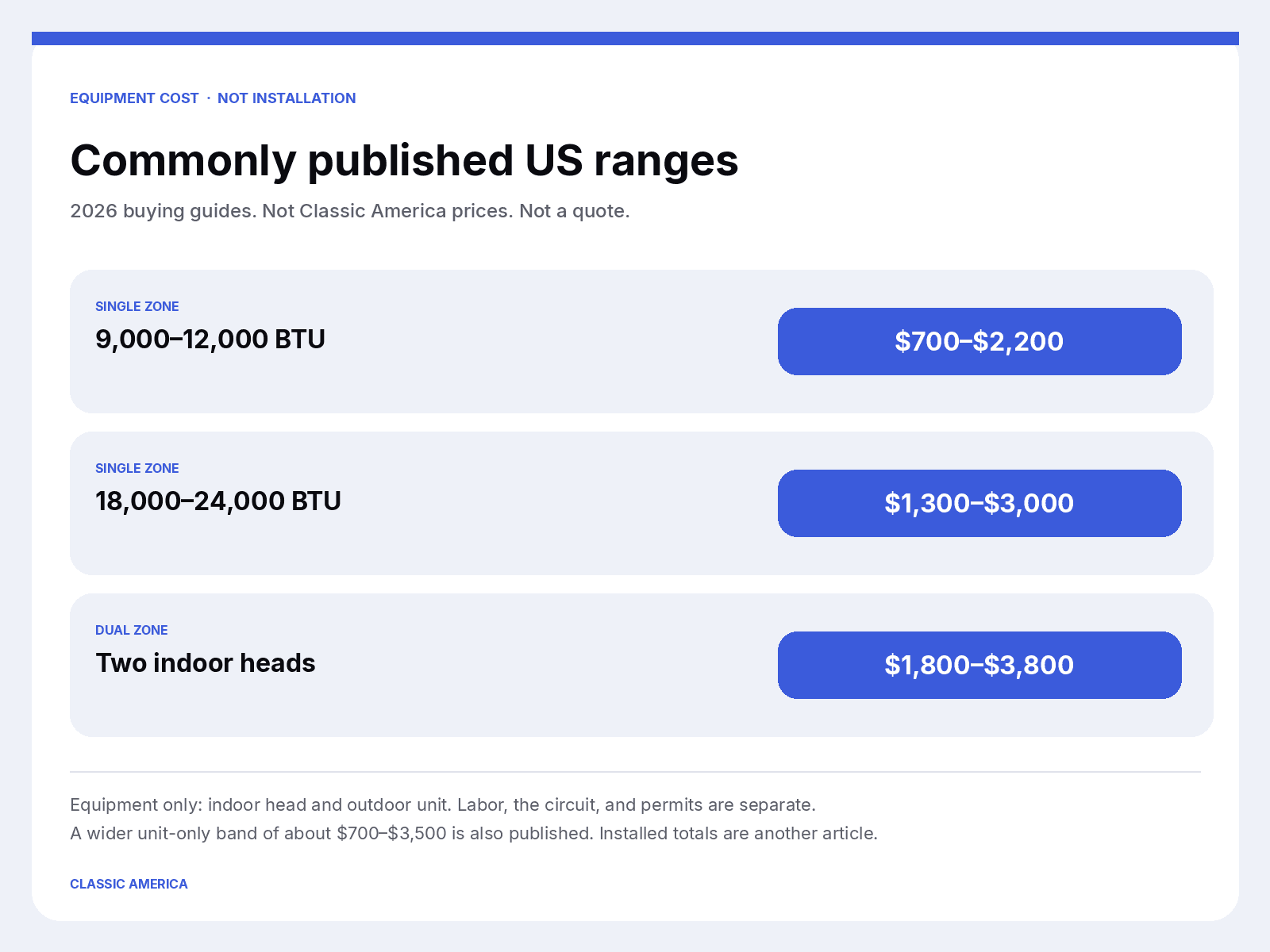
- How much does a mini split cost? For the equipment alone, 2026 US guides commonly publish about $700 to $2,200 for a 9,000–12,000 BTU single zone, about $1,300 to $3,000 for an 18,000–23,000 BTU single zone, and about $1,800 to $3,800 for a two-zone system.
- Those are commonly published US figures, not Classic America prices, and not a quote for your home.
- You'll also see a wider “unit only” band of about $700 to $3,500 before the guides break it down by size.
- Installation is a separate total, and this page doesn't price labor. For that, see our mini split installation cost guide.
- Buy the capacity your room actually needs. Start with the Size Finder, then look at price.
Equipment cost, not installation cost
When people search “mini split cost,” “mini split AC cost,” or “how much does a mini split cost,” they usually mean what's in the box: an indoor head and an outdoor unit. “Mini split installation cost” means that equipment plus labor, and often a circuit, a disconnect, line-set covers, and a permit. Search results tend to mix the two together, but your invoices shouldn't.
This page sticks to the equipment. A 2026 guide from Filterbuy publishes a single-zone installed total of about $2,000 to $6,000, which is the whole combined job. National Air Warehouse’s 2026 table puts a 9,000–12,000 BTU single zone at around $2,000 to $5,500 installed. Those installed bands are a helpful pointer, not a price list, and they're covered on our mini split installation cost page. Please don't subtract a guessed labor number from them and treat what's left as Classic America’s price.
Commonly published US equipment ranges
The size-based rows below are the equipment-only bands from National Air Warehouse’s 2026 table. The last row is the wider unit-only band from Filterbuy’s 2026 guide, before it breaks things down by size. Other 2026 write-ups land close by: a one-ton single-zone unit is often published at around $600 to $2,000. These bands are great for getting a feel for the market, but they aren't Classic America prices. The list prices we actually charge are on the product cards further down, and only there.
| Equipment | Published range | What it is counting |
|---|---|---|
| Single zone, about 9,000–12,000 BTU | $700–$2,200 | Indoor head and outdoor unit. No labor. |
| Single zone, about 18,000–24,000 BTU | $1,300–$3,000 | Larger single-zone equipment. No labor. |
| Two indoor heads | $1,800–$3,800 | One outdoor unit and two heads. No labor. |
| Single zone, before a size split | $700–$3,500 | A wider unit-only band some 2026 guides use. |
Those bands are published US figures, not a price for your house. Size the room with the Size Finder before you compare equipment. What a contractor charges to install is a different page: mini split installation cost.
What a single-zone mini split costs
A single-zone mini split is one outdoor unit and one indoor head, for one room. That's the system most people have in mind when they search for mini split AC cost. In the published bands, the 9,000 and 12,000 BTU class makes up the lower equipment row, and an 18,000 or 24,000 BTU single zone is the next row up. Capacity is the biggest price driver. After that come efficiency, brand, and whether the unit is a heat pump.
Every single-zone mini split in our catalog is a heat pump, so it cools and heats. A window unit is a different kind of product: usually less money, cooling only, and it sits in your window. If you're weighing the two, our guide on mini split versus a window air conditioner covers it; it isn't a row on this table. Before you decide a size is “close enough,” size the room with our mini split sizing guide.
What moves the equipment price
Capacity moves the price first. A 23,000 BTU outdoor unit has more metal and more compressor than a 9,000 BTU unit, and the published bands reflect that. Adding a second indoor head moves it again, because you're buying two heads plus a multi-zone outdoor unit.
SEER2 moves the price when a spec sheet actually publishes a number. Equipment with a higher published SEER2 often costs more, but that's never a reason to make up a rating. Here's what our sheets say: the 9,000 BTU model is 23 SEER2. The 12,000 BTU models are 19 SEER2 and 17 SEER2. DUET is 24 SEER2 (non-ducted). The 23,000 BTU model is 17 SEER2. Those published ratings are part of the price conversation, and we stick to them. For the longer story on why two boxes with the same BTU can still be priced differently, read why mini split prices vary.
Voltage comes up in the price conversation because the larger sizes move beyond 115V. Our 9,000 and 12,000 BTU single-zone systems are 115V, the class most people call 110V. The 23,000 BTU system and DUET are 208/230V. A new circuit means labor and an electrician, which is covered in the installation article rather than here. Our upcoming 110V mini split guide covers the plug-in class, and the 110V mini split hub shows every model we offer on 115V.
List prices in this catalog
The cards below show Classic America list prices for the equipment in our catalog. A list price is what the product page charges for that model. It isn't the national range from the table above, it isn't an installed price, and it doesn't include a new circuit, a permit, or a line-set run longer than what ships in the box. If a card and a published band don't match, that's completely normal: retail kits and contractor-channel equipment are different markets. Go by the card, and don't average it into the band.
Coverage still matters more than which card is cheaper. The 19 SEER2 12,000 BTU model covers up to about 550 square feet, not 600. The 17 SEER2 model publishes 11,500 BTU of cooling and covers up to about 550 square feet. The 9,000 BTU model covers up to about 450 square feet, and the 23,000 BTU model covers up to 1,400 square feet. DUET is built for two rooms; it isn't a discount way to cool one large room.
From the spec sheet
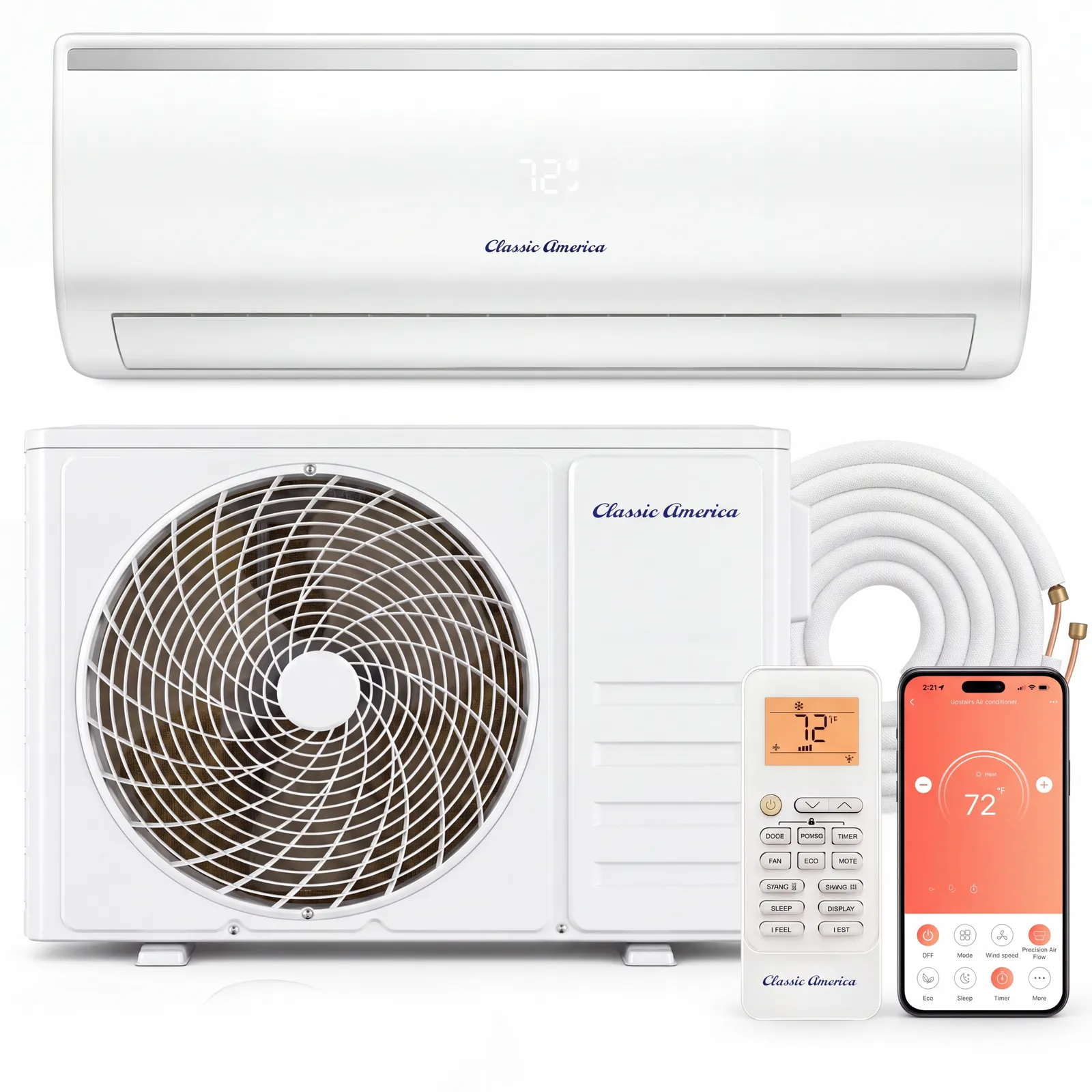
- 9,000 BTU/h cooling · 0.75 ton
- 23 SEER2
- 115V
- Up to 450 sq ft
- Heating nameplate 9,500 BTU/h
From the spec sheet
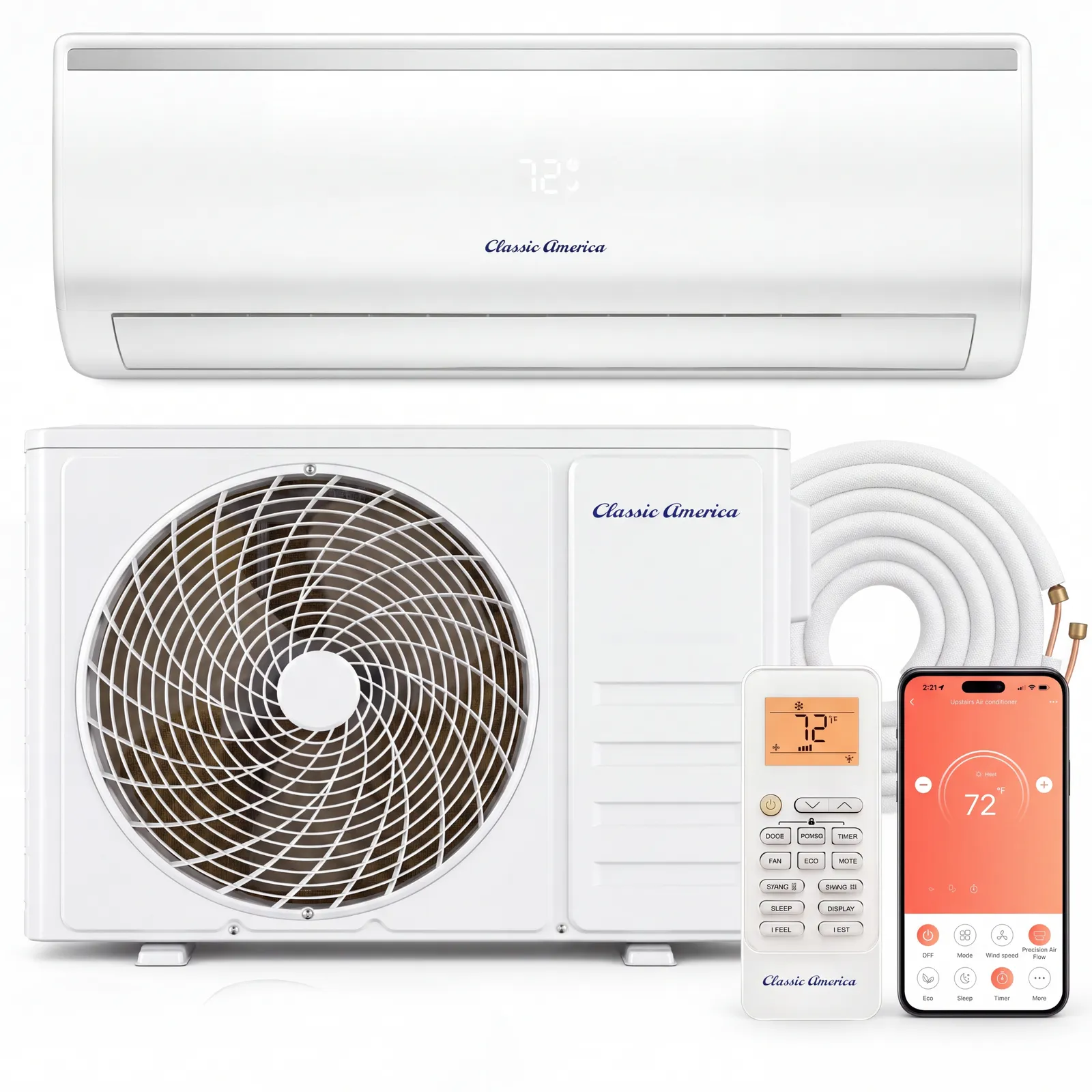
- 12,000 BTU/h cooling · 1 ton
- 19 SEER2
- 115V
- Up to 550 sq ft
- Heating nameplate 12,200 BTU/h
From the spec sheet
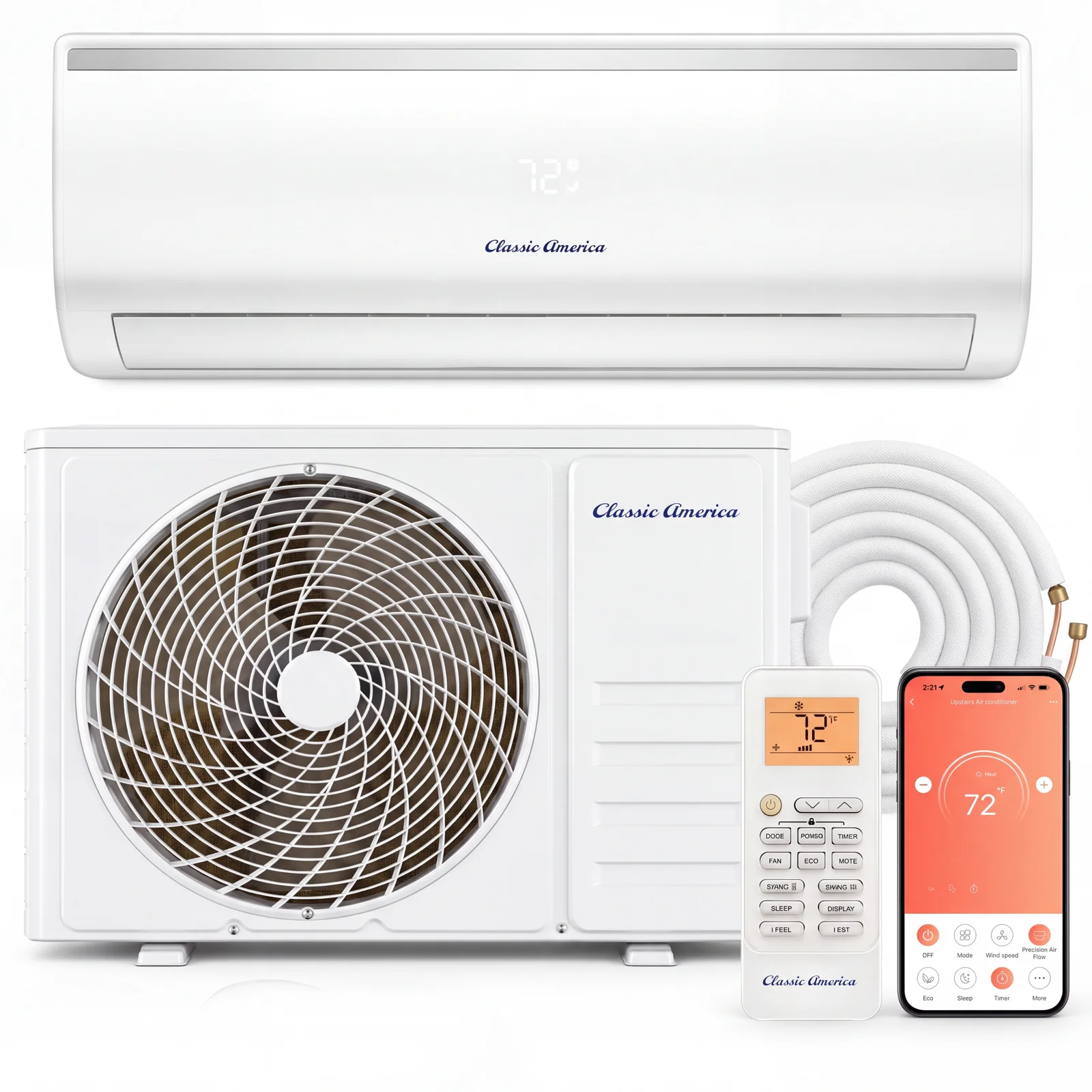
- 11,500 BTU/h cooling · 0.96 tons
- 17 SEER2
- 115V
- Up to 550 sq ft
- Heating nameplate 11,500 BTU/h
From the spec sheet
- 23,000 BTU/h cooling · 1.92 tons
- 17 SEER2
- 208/230V
- Up to 1,400 sq ft
- Heating nameplate 22,400 BTU/h
From the spec sheet
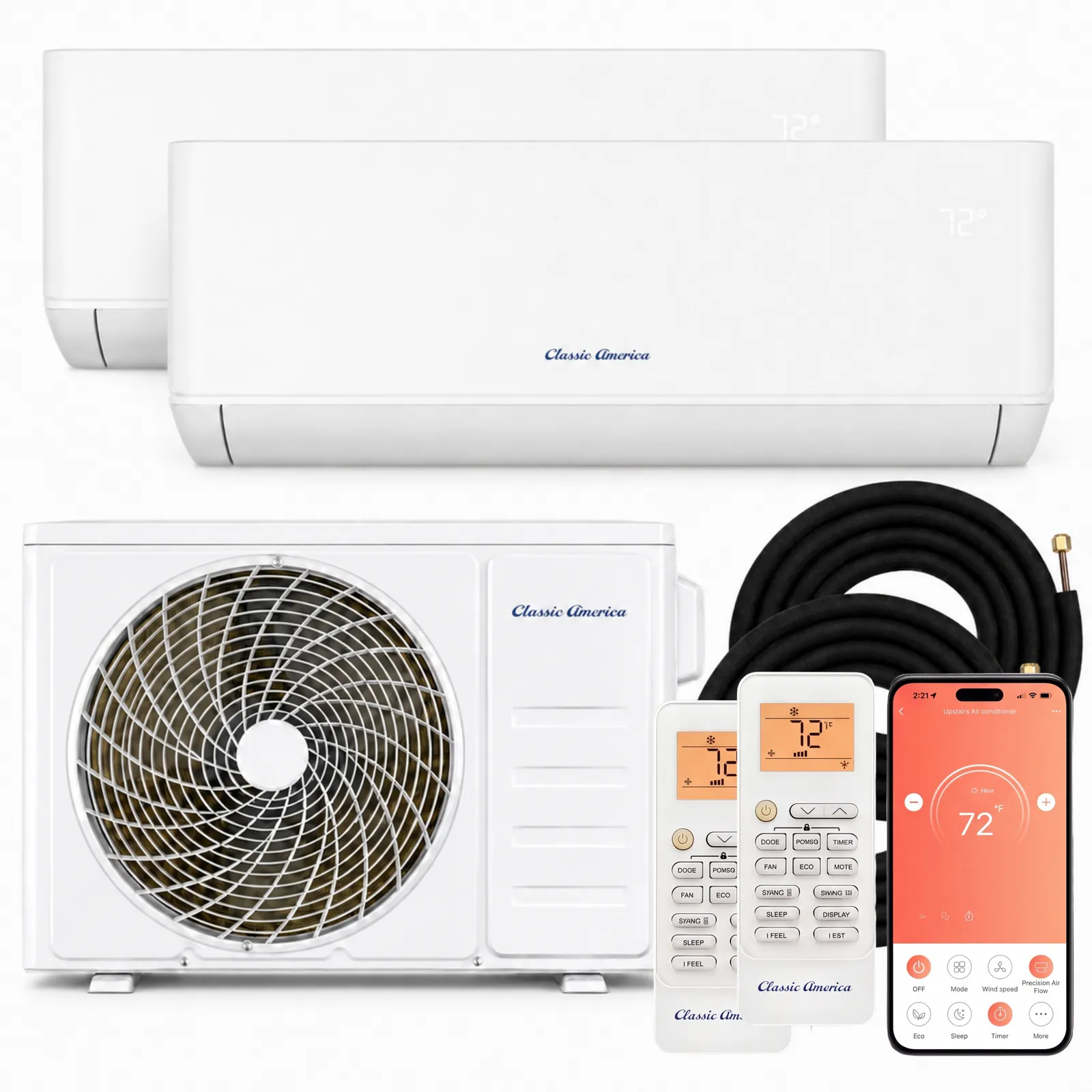
- 18,000 BTU/h cooling · 1.5 tons
- 24 SEER2, non-ducted
- 208/230V
- Two 9,000 BTU indoor heads on one outdoor unit
- Heating nameplate 20,000 BTU/h
Two rooms cost a different system
The cost of a mini split system for two rooms isn't twice the single-zone price, and it isn't one bigger head either. In the table above, published two-zone equipment runs about $1,800 to $3,800 before labor. In our lineup, the two-room system is DUET: 18,000 BTU outdoors, two 9,000 BTU heads, 24 SEER2 non-ducted, on 208/230V. It's the right pick when each room fits a 9,000 BTU head. If the Size Finder says one of your rooms needs 12,000 BTU or the 23,000 BTU system, a pair of 9,000 BTU heads is the wrong buy at any price. Our dual zone mini split guide goes deeper on zones, and the dual-zone hub has the model itself.
What this equipment price leaves out
Labor, the vacuum, and the refrigerant connections aren't included in the equipment bands or in the list price on the card. Neither is a dedicated circuit. The same goes for permits, a wall bracket if you need one beyond what's in the box, and line-set covers. Our delivery and installation guide shows exactly what ships, and the install planner checks line-set length and power against your model well before install day.
Don't shop the range as if it were your price
- The dollar bands on this page are commonly published US figures. They aren't Classic America prices.
- A low price on the wrong size isn't a savings. Undersized equipment runs and runs without catching up, and oversized equipment can short-cycle and leave the room feeling damp.
- The 23,000 BTU model is rated 17 SEER2 on the current sheet. Don't pay extra for (or pass on a unit because of) a number we don't publish.
- Refrigerant connections, pulling a vacuum, and a dedicated electrical circuit are jobs for a licensed HVAC professional. Skipping that work isn't a discount.
What you can plan, and what a pro handles
- Planning the mounting wall, where the outdoor unit will sit, and the path of the line set is great homeowner work.
- These systems come with a 5-year compressor warranty and 1 year on parts.
- Installed totals, including labor, are covered in our installation cost guide rather than here.
Start by sizing with the Size Finder, read up on the size classes in the mini split sizing guide, and line up spec sheets side by side in the compare tool. A garage has its own kind of load, so we wrote a separate guide: mini split for a garage. If you already know the tons and need BTU, the BTU to tons guide has you covered. Want to talk through the model you matched with a real person? Call us at 1-800-349-4360 Ext. 204, Monday through Friday, 10 AM to 3 PM ET.
FAQ
Common questions
How much does a mini split cost?
For the equipment only, 2026 US guides commonly publish about $700 to $2,200 for a 9,000–12,000 BTU single zone, about $1,300 to $3,000 for an 18,000–23,000 BTU single zone, and about $1,800 to $3,800 for two indoor heads. A wider unit-only band of about $700 to $3,500 is also published. These are commonly published US figures, not Classic America prices, and not a quote.
Does that include installation?
No, this page covers the equipment. Guides often publish a single-zone installed total of around $2,000 to $6,000, which is equipment plus labor. That combined job has its own article: mini split installation cost.
How much does a 12,000 BTU mini split cost?
In the published equipment bands, a 9,000–12,000 BTU single zone is often listed at around $700 to $2,200 before labor. Classic America’s list price is the number on the product card, not that band. Our 19 SEER2 model is 12,000 BTU/h and covers up to about 550 square feet. The 17 SEER2 model publishes 11,500 BTU and covers up to about 550 square feet. Size the room first, then compare prices.
Why do two mini splits with the same BTU have different prices?
Published SEER2, the compressor, cold-weather heating performance, what's in the box, and whether you're looking at a retail kit or contractor-channel equipment all move the price. Why mini split prices vary walks through the ratings. A higher SEER2 only means something when the spec sheet publishes it. Our 23,000 BTU model is rated 17 SEER2 on its current sheet.
Is a two-zone system twice the price?
Not as a rule. Published two-zone equipment is often about $1,800 to $3,800, which is more than a small single zone but not simply double. DUET is one outdoor unit with two 9,000 BTU heads, rated 24 SEER2 non-ducted. The list price is on the card. It's the right fit only if each room fits a 9,000 BTU head.
Can I install it myself and skip the labor cost?
You can plan the mounting wall, the outdoor-unit location, and the line-set path. Refrigerant connections, pulling a vacuum, and a dedicated electrical circuit are jobs for a licensed HVAC professional. That work isn't an optional extra. You're covered for 5 years on the compressor and 1 year on parts.
Quick poll