Understanding SEER: The Key to Efficient Air Conditioning
James S.Jan 4th 20242 min read
Key takeaways
- The post defines SEER as seasonal cooling output (BTU) divided by electricity used (watt-hours).
- A higher SEER number means more cooling per unit of electricity, and a lower operating cost.
- It points to U.S. Department of Energy test procedures as the basis for the rating.
When shopping for a new air conditioner, one of the most important specifications to consider is the system's SEER rating. SEER stands for Seasonal Energy Efficiency Ratio, and it provides an objective measure of a unit's ability to effectively cool your home without wasting energy. Higher SEER ratings indicate greater efficiency, lower operating costs, and reduced environmental impact. Here's a closer look at what SEER means.
SEER is a formula that determines the total amount of cooling (in
British Thermal Units or BTUs) delivered by an air conditioner divided
by the total electric energy (in watt-hours) it consumes over typical
cooling-season conditions. The higher the end number, the more cooling
you get for each unit of electricity used. This efficiency translates
directly into lower utility bills.
The U.S. Department of Energy uses standardized testing procedures to rate units between 10 and 22 SEER. Most new central air conditioners sold today fall between 13-18 SEER, but premium "high-efficiency" models can reach 21-23 SEER. The minimum standard was last raised from 13 to 14 SEER in January 2015.
As an example, air conditioners with a 14 SEER rating will operate at
approximately 14,000 BTUs of cooling per 1,000 watt-hours of electricity
consumed. A matching 16 SEER unit would provide around 16,000 BTUs per
1,000 watt-hours, a savings of around 14%. Over a typical cooling
season, this small efficiency gain reduces electricity bills by hundreds
of dollars compared to older, less efficient units rated below 14 SEER.
Higher ratings translate to even greater savings. A 18 SEER air conditioner could cut energy costs by up to 30-40% versus a minimum efficiency 10 SEER model from the 1980s. Upgrading just one percentage point in SEER saves about 3% on utility bills annually. Given the long lifespan of AC units, these small efficiency gains add up to major long-term savings.
Although SEER focuses only on typical seasonal usage, high-efficiency
units also perform better during extreme temperature days. Their ability
to shed heat faster means they don't have to run as long on the hottest
afternoons. This minimizes electricity demand when utilities levy
expensive "peak load pricing" surcharges.
Power plants must burn more fossil fuels to meet increased electricity
use from inefficient air conditioners. Opting for a high SEER model
reduces this carbon footprint. Calculations indicate a 1 SEER increase
prevents around 875 pounds of carbon pollution annually for a typical
home system. This favors climate change mitigation goals.
In summary, SEER ratings provide a reliable metric for assessing the potential utility bill and environmental impacts of different AC unit options. Choosing equipment with the highest SEER possible delivers substantial long-term savings and sustainability wins for owners. Every extra point makes a positive difference for budgets and the planet.
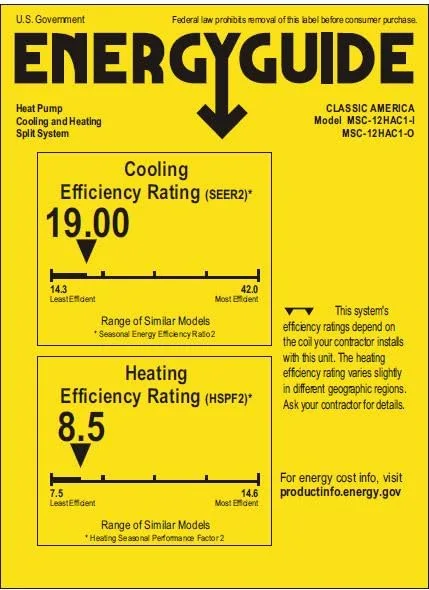
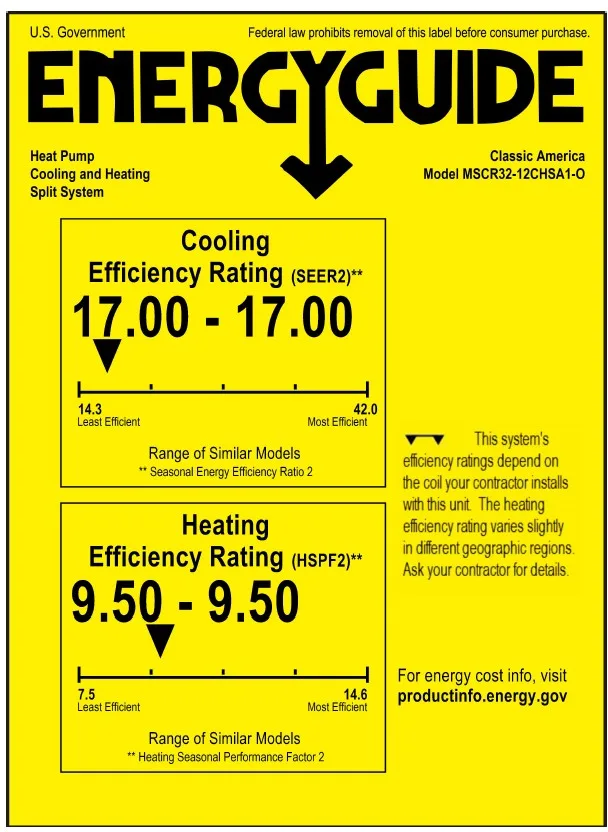
This article explains the older SEER label. New equipment in the US is rated with SEER2, which is a different test, not a new name for the same number. Read what SEER2 means for the current rating. Every Classic America mini split in the current lineup publishes SEER2, including 17 SEER2 on the 23,000 BTU model.

Check the article
Fill in the number from this article
Department of Energy uses standardized testing procedures to rate units between ____ and 22 SEER.
Most new central air conditioners sold today fall between ____-18 SEER, but premium "high-efficiency" models can reach 21-23 SEER.
The minimum standard was last raised from ____ to 14 SEER in January 2015.
As an example, air conditioners with a ____ SEER rating will operate at approximately 14,000 BTUs of cooling per 1,000 watt-hours of electricity consumed.