110V Mini Split: 115V, 120V, and How They Compare With 230V
Classic AmericaOct 14th 20269 min read
The short answer
- A 110V mini split runs on regular household voltage. Classic America lists that class as 115V, and you'll also hear people say 120V. They're all the same circuit, not three different products.
- Our 9,000 BTU system and both 12,000 BTU systems are 115V. The 19 SEER2 model is published for up to about 550 square feet. The 17 SEER2 model in that class publishes 11,500 BTU of cooling and coverage up to about 550 square feet.
- 115V vs 208/230V means a different circuit, not just a bigger outlet. The 23,000 BTU system is 208/230V (people also call that family 220V or 240V), and so is DUET.
- Every mini split we sell needs its own dedicated circuit. A window unit is the one that plugs into a grounded 115V outlet; a 115V mini split doesn't.
- A new breaker, disconnect, or run from the panel is a job for a licensed electrician, and the refrigerant and vacuum are a job for a licensed HVAC technician. You're covered for 5 years on the compressor and 1 year on parts.
Quick comparison
| System | What shoppers call it | Spec-sheet voltage | Published for |
|---|---|---|---|
| 9,000 BTU (MSCT-09HAC1) | 110V, 115V, or 120V | 115V~/60Hz/1P | 23 SEER2, up to about 400 sq ft |
| 12,000 BTU, 19 SEER2 (MSC-12-HAC1) | 110V, 115V, or 120V | 115V~/60Hz/1P | 12,000 BTU/h cooling, up to about 550 sq ft |
| 12,000 BTU, 17 SEER2 (MSCR32-12CHSA1) | 110V, 115V, or 120V | 115V~/60Hz/1P | 11,500 BTU cooling, up to about 550 sq ft |
| 23,000 BTU (MSCR32-23CHSA2) | 208V, 220V, or 230V | 208/230V~/60Hz/1P | 17 SEER2, up to 1,200 sq ft |
| DUET dual zone | 208V, 220V, or 230V | 208/230V~/60Hz/1P | Two 9,000 BTU heads. 24 SEER2, non-ducted. |
| Window AC, 8,000 or 12,000 BTU | Plug-in 110V / 115V | 115V | Cooling only, into a grounded outlet |
An 110V mini split is the 115V and 120V class
The product page might say 115V, while a neighbor tells you that you need 220. Those aren't two names for the same outlet. This guide is here to help you choose a Classic America mini split: which models are in the 110V class, which need a higher-voltage circuit, and why a new circuit is a job for a licensed electrician.
In a typical U.S. home, the everyday wall circuit is what people call 110V, 115V, or 120V. Classic America lists our 9,000 and 12,000 BTU single-zone mini splits as 115V~/60Hz/1P, which is the figure on the spec sheet. “110V mini split” and “120V mini split” are just the names shoppers use for that same class. So if you've been searching for either one, these 115V systems are what you're looking for, even though the sheet says 115V.
Higher voltage means a different circuit. Our 23,000 BTU single-zone system is listed at 208/230V~/60Hz/1P, and so is DUET. You'll also hear people call that family 220V or 240V. 208V is more common in apartments and other buildings fed by three-phase power, so have a licensed electrician confirm which voltage your building actually has before ordering the higher-voltage equipment. If your real question is whether you need one room or two, the dual zone mini split guide is a great next read.
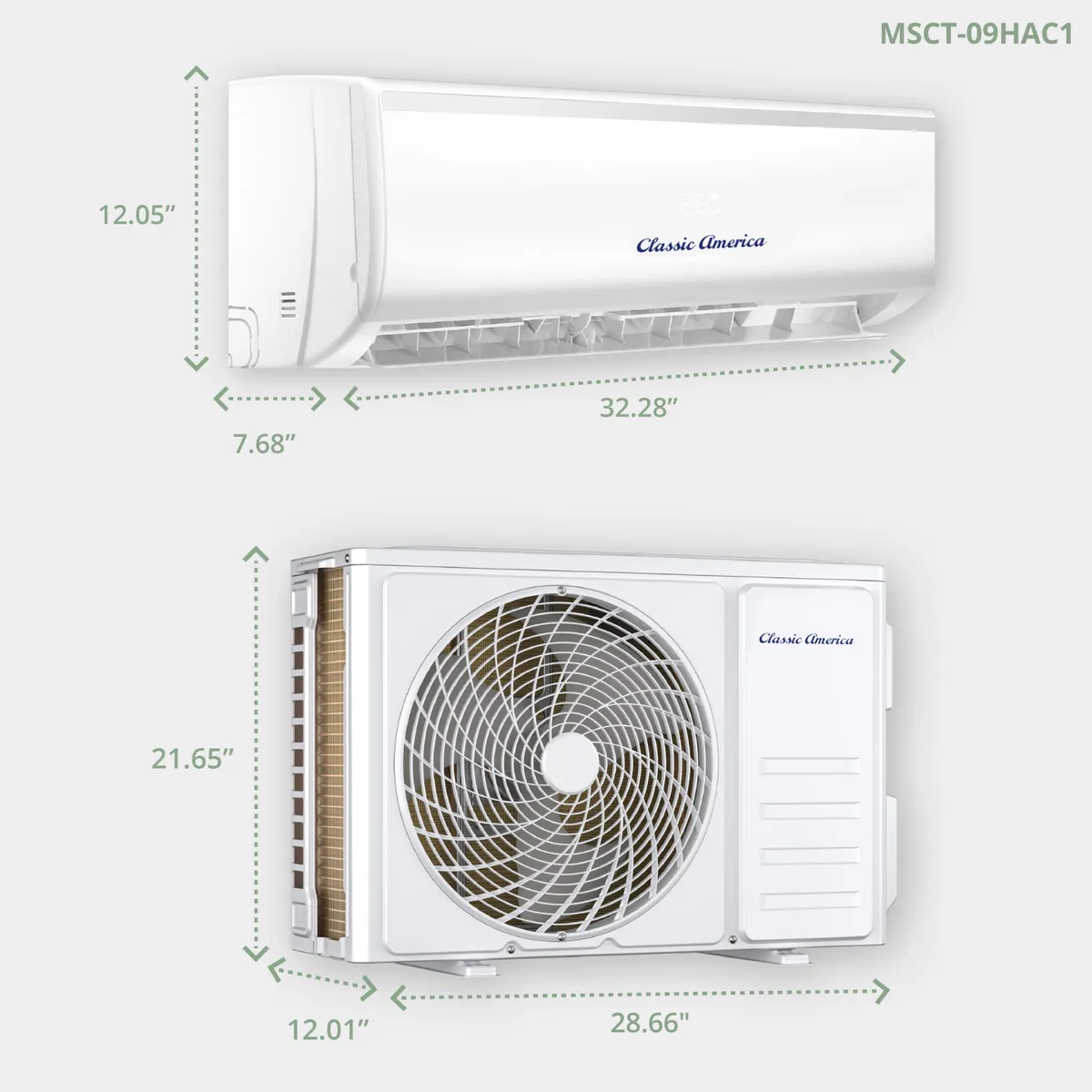
115V vs 230V in this lineup
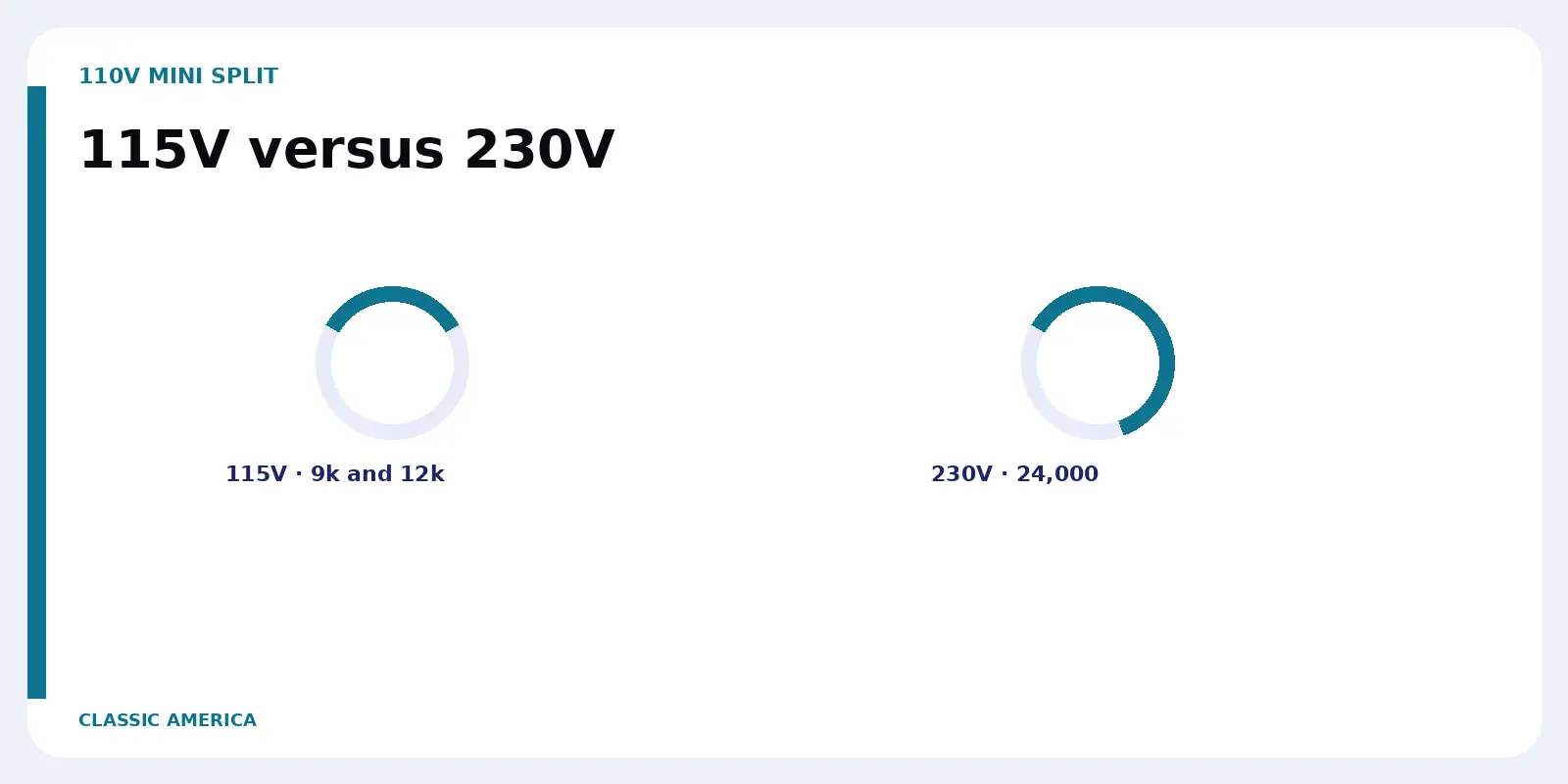
Voltage goes with the model; square footage doesn't pick the breaker. The highlighted column shows the spec-sheet voltage, which is the number to match. The shopper-name column is just there so 110V, 120V, 220V, and 240V land on the right row.
Capacity and voltage are two separate checks. The Size Finder turns your room into a BTU number, and the BTU to tons guide translates a contractor’s “ton” into these same sizes. A 115V model that's too small for the room is still the wrong buy. When both voltage and capacity matter, line up the specs in the compare tool.
115V single-zone systems
These three make up the 110V mini split class in our lineup. Check out the 9,000 BTU mini split, the 19 SEER2 12,000 BTU mini split, and the 17 SEER2 12,000 BTU mini split, or see them side by side on the 110V mini split hub. The 9,000 BTU hub and the 12,000 BTU hub are the capacity pages. Many homes can power these sizes without a new 230V circuit, though a licensed electrician should still confirm the circuit can carry the nameplate load. The prices on the cards are equipment list prices.
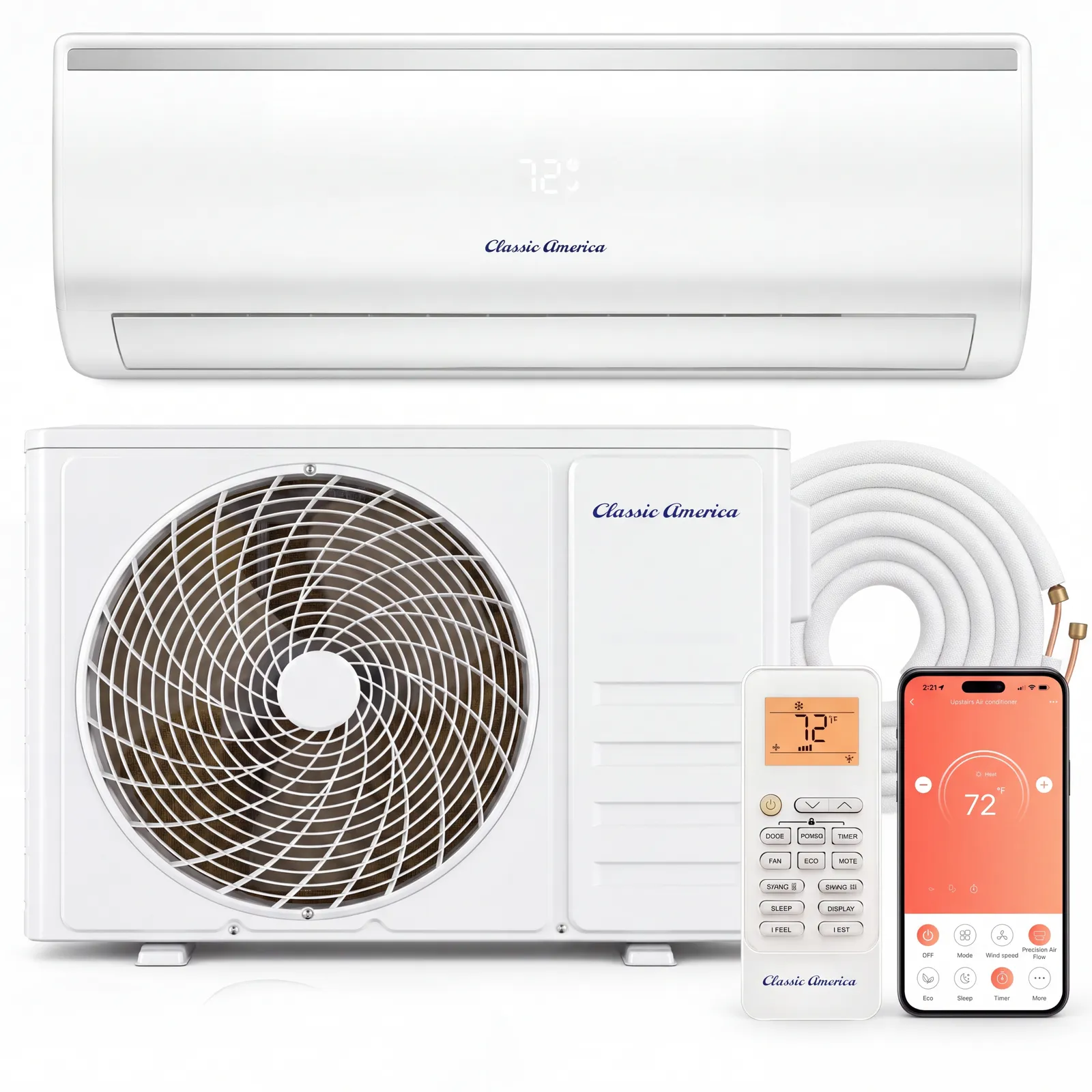
From the spec sheet
- 9,000 BTU/h cooling · 0.75 ton
- 23 SEER2
- 115V
- Up to 400 sq ft
- Heating nameplate 9,500 BTU/h
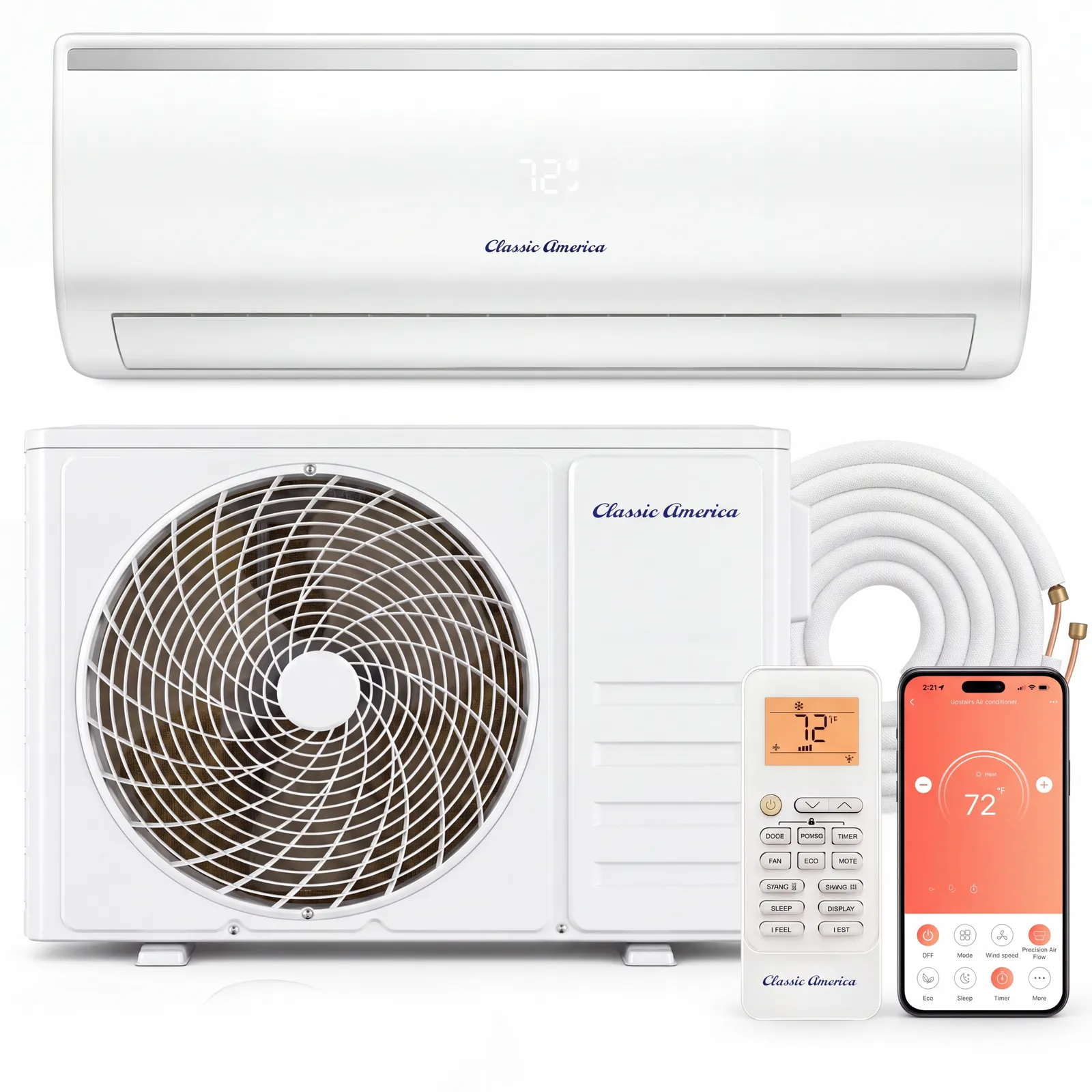
From the spec sheet
- 12,000 BTU/h cooling · 1 ton
- 19 SEER2
- 115V
- Up to 550 sq ft
- Heating nameplate 12,200 BTU/h
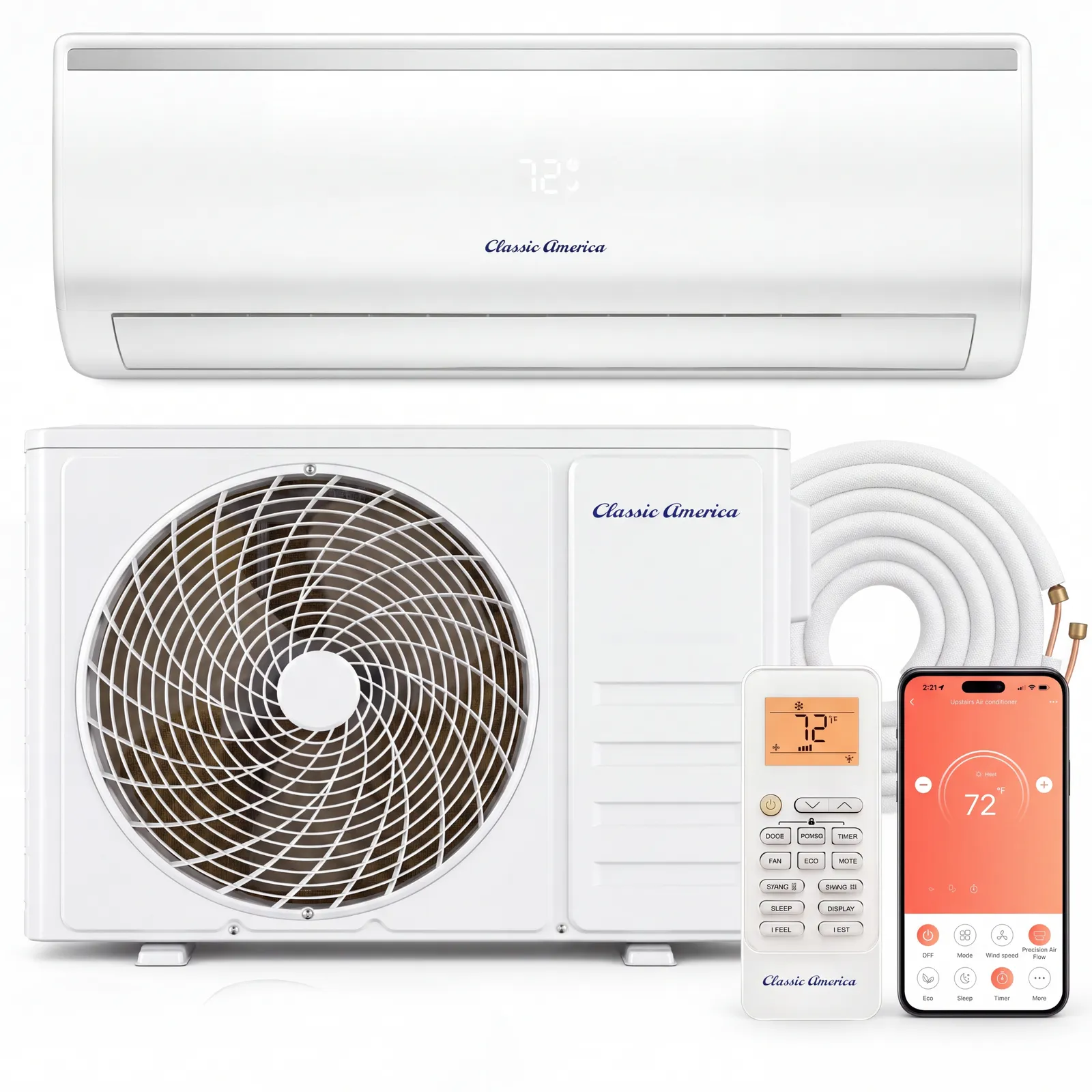
From the spec sheet
- 11,500 BTU/h cooling · 0.96 tons
- 17 SEER2
- 115V
- Up to 550 sq ft
- Heating nameplate 11,500 BTU/h
230V and 240V, as the comparison
The 23,000 BTU mini split and the 23,000 BTU / 2 ton hub are for one large open area on 208/230V. Published coverage is up to 1,200 square feet, since shade and sun change the job. That model is rated 17 SEER2. DUET and the dual-zone hub are for two rooms: one outdoor unit rated for 18,000 BTU of cooling, two indoor heads at 9,000 BTU each, 208/230V, R454B refrigerant, and a published non-ducted rating of 24 SEER2. Coverage is 2 rooms, up to 400 sq ft each. Two rooms rarely have the same load, so size each one.
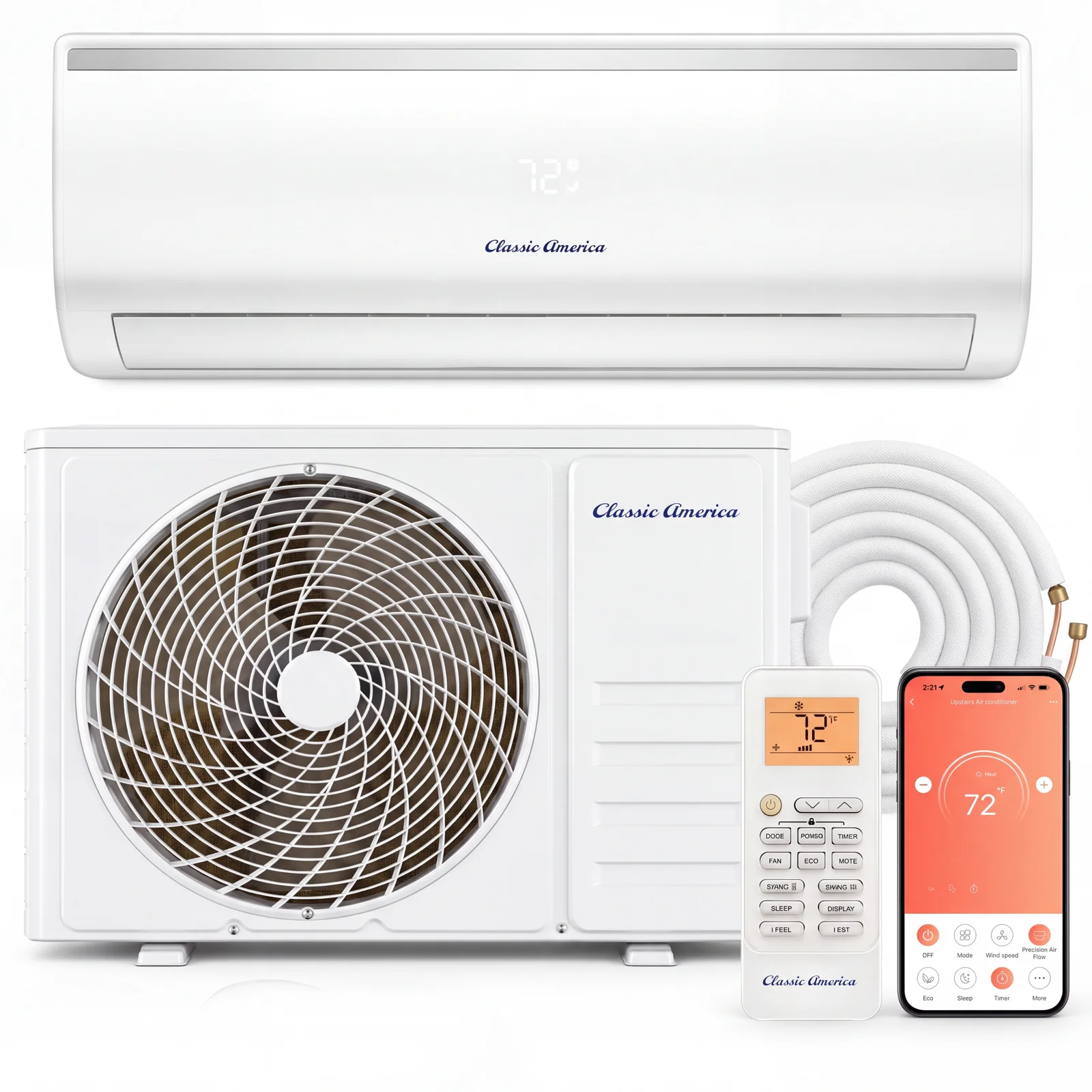
From the spec sheet
- 23,000 BTU/h cooling · 1.92 tons
- 17 SEER2
- 208/230V
- Up to 1,200 sq ft
- Heating nameplate 22,400 BTU/h
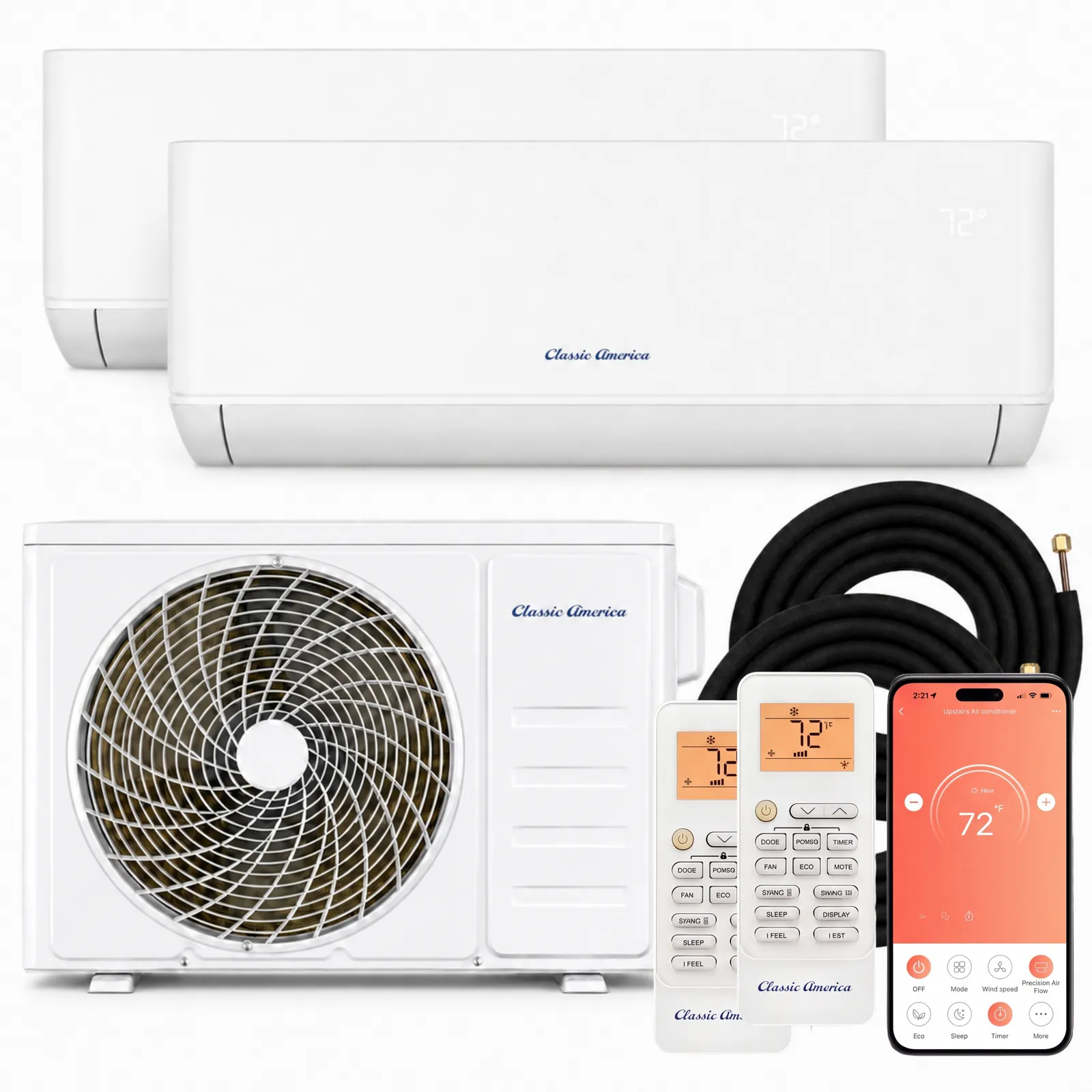
From the spec sheet
- 18,000 BTU/h cooling · 1.5 tons
- 24 SEER2, non-ducted
- 208/230V
- Two 9,000 BTU indoor heads on one outdoor unit
- Heating nameplate 20,000 BTU/h
Picked a model? The free Install Planner checks line-set length, mounting, and whether that system is 115V or 208/230V. Then browse 110V mini splits, the 23,000 BTU / 2 ton system, or DUET.
A dedicated circuit is not a spare outlet
Every Classic America mini split in our lineup is designed for its own circuit, sized to the nameplate and the installation manual, with an outdoor disconnect wherever local code calls for one. That goes for both the 115V and the 208/230V models.
Using a spare bedroom outlet isn't a great plan. That outlet may already share a circuit with lights, a TV, or a space heater. The spec sheets list a minimum circuit ampacity and a breaker size so your electrician can see the load. Those nameplate figures are meant for the electrician, alongside the manual and local code. They aren't a wiring diagram, and this page won't tell you which wire to pull.
| System | Voltage | What the spec sheet publishes |
|---|---|---|
| 9,000 BTU (MSCT-09HAC1) | 115V | Minimum circuit ampacity 16A, 25A breaker |
| 12,000 BTU, 19 SEER2 (MSC-12-HAC1) | 115V | Minimum circuit ampacity 17A, 25A breaker |
| 12,000 BTU, 17 SEER2 (MSCR32-12CHSA1) | 115V | Minimum circuit ampacity 17A, 25A breaker |
| 23,000 BTU (MSCR32-23CHSA2) | 208/230V | Minimum circuit ampacity 17A, 25A breaker. Rated current 12A cooling / 13A heating. |
| DUET outdoor unit | 208/230V | Minimum circuit ampacity 16A, 25A breaker |
A licensed electrician matches the wire, breaker, and disconnect to the nameplate, the manual, and your local code. Your panel brand, the loads already on your service, and the length of the run can all change what they install. Please leave the panel cover on.
What “plug-in” actually means here
- A window unit plugs into a grounded three-prong 115V outlet within reach of its cord. Please don't use an extension cord.
- A 115V mini split runs on household voltage but still needs a dedicated circuit. At 9,000 or 12,000 BTU, many homes can handle that on household voltage, though a licensed electrician should still confirm the circuit.
- A 230V or 208/230V mini split can't run from a standard 115V outlet. A dryer or range outlet elsewhere in your home is already busy powering that appliance, so the mini split needs its own circuit.
The 8,000 BTU window air conditioner and the 12,000 BTU window air conditioner are our plug-in products, both 115V and cooling only. You can check the outlet for those on the Window Fit Checker. For mini split power, use the Install Planner, which shows the voltage of the model you pick and whether that circuit is ready, still needed, or still to confirm. If a window unit sounds like the better fit, browse the window AC category.
When a new circuit needs a licensed electrician
It's a good idea to call a licensed electrician before you buy if any of these sound like your home:
- You want the 23,000 BTU system or DUET, and you don't have a spare circuit at that voltage for it.
- Your building might be 208V rather than a typical home's 240V service. DUET and the 23,000 BTU system are both listed at 208/230V, so have the electrician confirm your building before ordering.
- Your panel is full, your service is old, or you're not sure whether there's room for another breaker.
- The job needs a new breaker, a new outdoor disconnect, or a new run from the panel to the outdoor unit.
- Someone has suggested tapping into a dryer circuit, a range circuit, or using an extension cord.
What to leave to a licensed pro
- Adding a dedicated circuit, upgrading a panel, and setting an outdoor disconnect are electrical work, even on a 115V mini split.
- Refrigerant connections, a nitrogen pressure test, pulling a vacuum, and opening the service valves are jobs for a licensed HVAC professional.
- Handy homeowners often still pick the wall, set the outdoor location, and route the line set. That planning just doesn't include the breaker or the flare.
Your warranty
- You're covered for 5 years on the compressor and 1 year on all other parts.
- Register within 60 days using the warranty form.
- We strongly recommend a licensed contractor. It's rare, but the warranty may not be honored if the unit wasn't professionally installed.
The Install Planner checks line-set length, mounting, and power against your model, and it'll tell you when the circuit still needs to be confirmed. Our installation and care guides and the delivery and installation page draw the same line between DIY and pro work.
Pick the room, then confirm the voltage
Start with the room. If the Size Finder lands on 9,000 or 12,000 BTU and your home has ordinary household voltage, take a look at the 115V systems on the 110V mini split hub and in the mini split category. If it's one large open area up to 1,200 square feet, you're looking at the 208/230V 23,000 BTU system, once an electrician confirms your building. Two closed rooms point to DUET on 208/230V, not a 115V head trying to reach around a corner.
Once the circuit question is settled, our buying guides cover the rest of your shopping questions. Have a question about a specific model? Give us a call at 1-800-349-4360 Ext. 204, Monday through Friday, 10 AM to 3 PM ET.
FAQ
Common questions
What is an 110V mini split?
It's a ductless system built for regular U.S. household voltage. Classic America lists that class as 115V~/60Hz/1P, and shoppers also call it 110V or 120V. In our lineup, that's the 9,000 BTU system and both 12,000 BTU systems. It still needs its own dedicated circuit; it doesn't plug into a spare outlet the way a window unit does.
Is 110V the same as 115V and 120V?
For shopping our lineup, yes. They're all names for the same household circuit class. The spec sheet says 115V, so use that figure with your electrician. There's no need to treat 110, 115, and 120 as three different mini splits.
What is the difference between a 115V and a 230V mini split?
They need different circuits. 115V vs 208/230V isn't just a matter of a bigger plug. Our 9,000 and 12,000 BTU systems are 115V. The 23,000 BTU system is 208/230V (often called 220V or 240V in conversation), and so is DUET at 208/230V. Have a licensed electrician confirm what your building has before you order the higher-voltage equipment.
Can a 110V mini split plug into a regular outlet?
No. The 8,000 and 12,000 BTU window air conditioners plug into a grounded 115V outlet. A 115V mini split uses that same voltage class but connects to its own dedicated circuit. An extension cord isn't the answer for either one.
Does a 23,000 BTU mini split need 208/230V?
Yes. The 23,000 BTU mini split is listed at 208/230V~/60Hz/1P, with a 25A breaker, a minimum circuit ampacity of 17A, and a rated current of 12A cooling / 13A heating. It covers up to 1,200 square feet and is rated 17 SEER2.
Can I wire the new circuit myself?
No. The dedicated circuit, breaker, and outdoor disconnect are jobs for a licensed electrician, on both 115V and 208/230V. Refrigerant connections and the vacuum are jobs for a licensed HVAC technician. You're welcome to plan the wall and the line-set path. You're covered for 5 years on the compressor and 1 year on parts.